At a recent ops evening, I realized that there is a big difference in the experience of a session that is dependent on how familiar one is with a railroad, layout or group of people. What made me consider this is that we had a guest operator that evening who is an experienced and well-known modeler and operator familiar with the prototype of the layout we were operating on, and I bet his experience was completely different than mine.
I've been operating on this particular layout for a few years, and I have worked a yard job several times now. This week was the first time I was able to operate this job 'in the zone' and not really have to put effort into what I was doing, but rather I found myself concentrating on how I was doing it.
I'm familiar enough to now know which trains do what, how they effect (or don't effect) my job, where the yard limits are, where industries are located, what to watch out for and when it is good to interface with other jobs, etc. Because of this, I was able to plan my work. Not only think about things in terms of what order should I do them, but also how should I get this from here to there, what makes sense to do at the same time I do that, how can I use that run around section most effectively, how can I keep working when I know there will be other people in the yard, etc. It made for a smooth evening and the satisfaction level was high.
Now I imagine our friendly visitor was having just as much fun as I was, but I'm betting for different reasons. He was not familiar with the schedule nor methods of doing things, and had a crew member working with him to help smooth over these things. It may have been a bit of a disjointed experience, since he had to break from operating the model several times during the night to get instruction and feedback on what was going on. He probably wasn't in the zone.
But, he was probably experiencing a different sort of enjoyment that stemmed from his greater knowledge of the prototype (he knew what the characteristics of the trains were better than I do), the prototype's procedures and translation into our operating rules, how this section of the prototype fits in relation to his layout (he models the same prototype), etc. On top of this he was in the throws of the interesting and challenging situation of learning new things, being around new people, and seeing everything on the layout for the first time. This all combined for an equally enjoyable evening to mine (unless he was lying), but his was a completely different experience. I'm guessing his evening was more exciting than mine, but that mine was probably a deeper overall experience.
So what might be learned from this bit of thinking? Several things leap to mind in terms of how a session and a layout are created and even how a layout may evolve its methods and operations over time. The obvious thing is about creating job situations that can fit different levels of experience and how one translates that to regular operators as well as for visitors. Explaining a few key things to a newbie can enhance the deeper satisfaction of a first session, and new items for old hands can bring new challenges and learning back into the picture to keep sessions interesting. The dissemination of knowledge about how to operate a given job on the layout could be gathered into a document (such as tips and tricks on how to operate the yard), that could be useful and added to by guests and regulars alike.
There are many more things I could think of around this idea of crafting an experience, but the point here is that we can approach model railroading as 'experience design.' This is a field of design that concerns itself with how users/ occupants/ customers experience a place, product, web site, etc. It is concentrated in the effort to invoke a certain type of feeling in the user to make bring them satisfaction or pleasure with the interaction in a certain way.
I think many modelers already subconsciously think this way without calling it experience design, especially when thinking about designing panels, waybill systems, etc. and probably more in terms of usability (interface or interaction design) versus emotional reactions. The design of the layout room can probably be thought of in these terms as well, with many modelers trying to get a feeling of the back woods by using paneled fascias or by using old time graphics and typography on their printed materials and signage. But I'm willing to bet that not many are consciously looking to create a certain emotional reaction or experience in a concerted manner with operating jobs. It would be interesting to approach things through this lens, and it is something that I will try to keep in mind as I am creating my own operating sessions.
Saturday, September 29, 2012
Thursday, August 23, 2012
Battery powered locomotives
| http://www.tamvalleydepot.com/ |
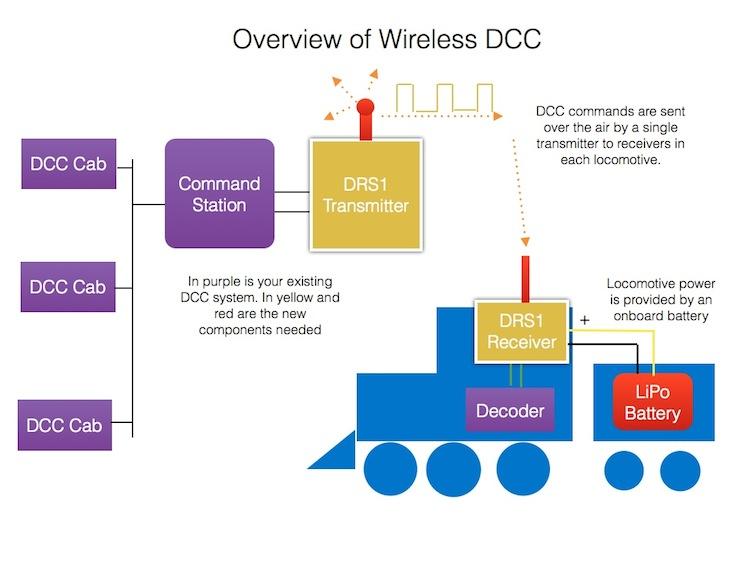
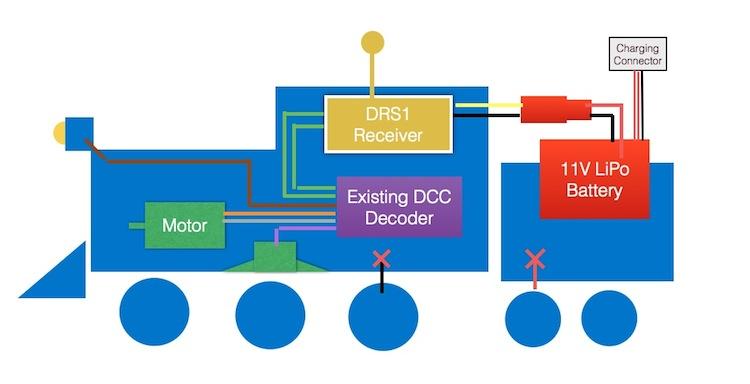
I've been waiting for this development ever since editing Rick Mugele's BR Locomotives article in LDJ 37. He was using a radio control unit built for R/C cars and large cell batteries in an ingenious set up for larger locomotives in HO scale. But now there is a product from Tam Valley Depot that marries battery power and DCC control In a wireless system that does not require clean track or wiring.
| http://www.tamvalleydepot.com/ |
I am completely ready for an alternative to track power for model railroads, and I see this as the last barrier to mainstreaming the hobby. The complications of completing a large amount infrastructure before using a toy have kept model railroading in the province of retired or people with large chunks of time available to devote to construction before recreation. This barrier was removed by the R/C industry years ago with cars and ARF (Almost Ready to Fly) airplanes and then helicopters. Foam construction made planes light and complete enough for quick wing attachment and charging of the batteries. Something similar needs to happen in model railroading, and battery powered locomotives are a key component.
Imagine Christmas morning (or Haunikha or a birthday or other occasion) and a ten year old rips open a toy that requires about a year of nights and weekends of carpentry, artistry, electrical wiring, and fiddling to get a modest size layout to the point when they can play with it. That toy is a train set. Now imagine the second present is an ARF airplane or a completely ready to fly helicopter or car ready to drive. Which one is going to be more desirable?
I'm interested in Tam Valley's offering, although it won't do me a lot of good for my switcher-heavy roster of 44 tonnes and box cabs in HO scale. I would need to use a boxcar or transfer caboose to store the extra equipment, but that is not possible with my pocket terminals. I'll get one to try out, but is impractical for usage for my pocket terminals at the moment. Miniaturization will need to be applied to this before it becomes a must have, but it is pretty darn close to that already. Let me know if anyone is trying this already. The tyranny of dirty track is about to come to an end!
UPDATE: http://ponyrr.blogspot.com/2014/07/cvp-rc-is-aok.html
Sunday, August 5, 2012
The importance of hand drawing
I think today people still have a romantic notion of futurist technology. There is still something about our never-ending desire for new stuff and new technology that always leaves behind sound, quality methods of practice. I think hand drawing is one of those methods that often gets overlooked in favor of the zippy-zoominess of computer drafting and modeling. This is as true in model railroading as it is in professional life.
With so many good track planning applications out there now, it is hard to resist the lure of technology in the layout designing process, but I believe that it should only be used where appropriate. And the appropriate time to use a rigid, neat and clean method is not at the beginning of design work, but rather after the idea has had a chance to be messy.
My own process includes many iterations on butter paper (also known as trash paper, trace paper, etc.)to get basic ideas and possible development paths out of my head and into a space where I can start to critically assess and work with multiple ideas. Having a semi-transparent paper helps tremendously as you can overlay a clean sheet over a previous idea and make minor changes or riffs off of that idea quickly. This very loose, preliminary programming (what are the different elements I will want to incorporate in the plan) is a time to get everything you can on paper to actually see what the possibilities are. I can't emphasize enough the importance of making your ideas visible in order to make significant and smart progress on any design.
After an initial brain dump onto paper, I will go back and cull good ideas and begin to work with them by adding, subtracting or combining ideas until I have one or two satisfying designs, then I move to a design development plan of sorts where I am trying to capture what a design would do with measured, real constraints and dimensions. This is still on paper, but it becomes a more careful rendering of ideas. In order to do this, I create a little template to use while drawing.
I make the template specifically for each layout. The one shown above is for my Hoboken Shore layout and is made from a scrap of chipboard (thin cardboard). I got this idea from Andy Sperandeo (I think it was a track planning supplement to Model Railroad Planning one year?). *Addendum: I found where I saw Andy's presentation of the template idea: Workshop Tips, Introduction to Track Planning, pg 11. This was one of their short supplement publications to MR at some point (no date, but there is a number on the cover, which is probably their identification number: 618147).* It includes a minimum radius, 50' box car scale, a turnout and track center scale. These are all dependent on what your layout established layout standards are going to be.
On the HBS, I am going to only use no.4 turnouts (on the HBS portion, but I'll have no. 6s in the Erie section) and I wanted to have an 18" maximum radius (if 18" works, I know 15" minimum will work in select areas if desired). The 50' box car will be my standard maximum length car (most will probably be 40'), and with the scale I will be able to ensure proper length of spurs for how many spots I want to have. Track centers become important in yards, and I figure a 2-1/2" spacing is workable with the amount of traffic and space I have.
This template is what I used on the current hand drawn plan so that I have a reasonable level of comfort that it will work. At this stage, everything is pretty well worked out in terms of desires, constraints and fit. Now it is time to appropriately move to the computer where precision comes into play as a means to make certain it works, and to make finer detail adjustments. If I went to the computer any sooner, it would become more difficult to try variations of any sort of magnitude because of the time devoted to precision with the computer as a tool.
Once I get the layout "into the computer", I will be able to not only get a precise plan, but I'll also be able to generate a list of track needed to accomplish it, the ability to print out full size templates if desired, and a nicely finished representation of what I am going to build. The operative word is finished, which is not the type of thing you need at the beginning of a design process. (Actually I believe any plan, including a finished one, is merely a starting point for change, and changing something in the field once you are working at full scale is perfectly acceptable and encouraged by me.)
So put down the mouse and pick up a no.2 thinking stick the next time you are going to start a track design. Your plan will be better for directness and immediacy of graphite smeared around some tracing paper.
This post was inspired by Tony Thompson's recent post on keeping a modeling journal, which is an excellent idea, and should come before you even get out the tracing paper!
Tuesday, July 31, 2012
Dynamo article in LDJ-47
It's hot from the printer's - go get it! (and join the LDSIG so that it shows up in the mail like magic every few months.)
- Planning the Newcastle-Fassifern Railway with LDEs
- Improving a Classic John Armstrong Plan in N Scale
- The Continuous Model Railroad: More Railroad than your Room Can Hold
- Proto-Freelance Midwest NYC Layout Inspired by Published Plans
- Weighing the Scales: Experienced Multi-Scale Modelers Discuss Pros and Cons
- Benchwork and Fascia Ideas from LDSIG Tours
… and more!
Download a free sampler of pages from this issue.
Sunday, July 29, 2012
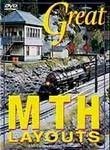
Great MTH Layouts DVD
This is a fairly good quality production of a "hey this is fun" genre video. I will confess I am in the "serious modeler" category that the narrator pokes at a couple of times and not in the toy train collector target audience, so I did not watch every second of each layout tour. The presentation was very geared towards generating consumer interest, and I can get past that considering a manufacturer of toy trains produced it.
Good camera work and the interviewees are well spoken and edited pretty well into the B roll of trains zipping around. There is a good variety of types of layout from the table-top temporary set up with no modeled scenery to the more realistic layouts. The narration continues to point out that these were not models, but rather toys, and that operations and/or simulation of the prototype is not the point of the activity.
This is where it started my thinking.
The video concentrated on the sensory experience of the toy train market, which I find the most interesting aspect of the video. This was some insight into the hobby that I had not previously figured out, but I've been meaning to give it some thought for awhile now: what are the different motivations behind the different modes of model railroading?
I'm finally getting to the point where I can easily see the connections between my current actions and childhood experiences that inform them, and turning this gaze on model railroading could be amusing. In the video it is clear that the collectors are looking to feel the thrill of the experience of the moving trains that they had as kids. The "sights and sounds" category of enthusiast obviously enjoys that rush we all had at one point or another of playing with a new toy at Christmas, and collecting and running (versus operating) trains tickles that pleasure center. I totally get that. The having versus making satisfaction and the seeing versus doing inclination is what separates the "collector / runner" and the "modeler / operator". This sort of definition could begin to fill out a matrix of scales and type of experience that could map the tendencies of different scales and modeling styles pretty easily (a rainy day project?).
What is great about this is that it is the way someone engages with the hobby that determines the outcome of their efforts and play. Methods of doing and the process of doing them are what is focussed on in magazines as a craft and sometimes with a philosophical foundation for the actions in support of the method. The "good enough" versus the "rivet counter" modelers approach to the practice of modeling in very different ways provide differing results that can/should be appreciated in different ways.
| Number 8, 1949 (detail) 1949, Jackson Pollock |
I take the view that the inherent logic and application of one's own set criteria is the more important thing when learning from others. Now when you get within an established order and identify with a set of criteria, then it is open season on criticism to make that established practice better. The problem is when people are judging by their own set criteria other's work that does not share that set of criteria. That is just unproductive at best, and hurtful at worst.
I try to practice this when I visit or see any model railroad (or any endeavor for that matter). I try to be careful to ask questions about what the intent is (usually it is obvious anyway) before I start appreciating the work so that I know how I am supposed to approach it.
| Sunflowers, 1888, Vincent van Gogh |
That's being said, I love to challenge both others' and my own criteria to help strengthen the logic and the outcomes. This constant testing of beliefs and goals is a good way to produce consistent and satisfying results no matter what you set out to do.
So back to the video. Like so many things I come across, it wasn't that I could take anything specific away from it that I could apply directly to anything I'm doing, but rather it got me thinking about things in general and helped clarify my thoughts on a different level. For that, I'm glad I spent some time watching something that I wouldn't normally be interested in.
Besides all that, though, sometimes it's just fun to watch toy trains be toy trains.
Friday, July 20, 2012
'Charming' is a good thing
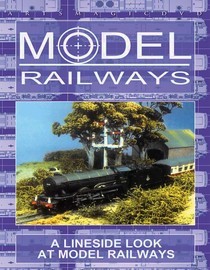
I watched a charming DVD this evening called A Lineside Look at Model Railways:
I can't fail to mention that almost every man wore a tie and the few ladies in the production were in their Sunday best with very nicely manicured hands and tastefully selected jewelry.
This is, though, what tickled the 'charm' reaction from me.
There is a connection between the British proper-ness and poise of the participants that blankets the model layouts in the show as well. None of the layouts portrayed trash heaps, industrial blight nor seedy streets. Most were of the very well-kept English countryside of gentle rolling greens and nicely maintained hedgerows and fence lines. Even the seaside venues were of orderly fashion and subjects. Very civilized and all that, pip, pip.
I suppose I'm not surprised at all that there is such a consistency in thought, mannerisms, approach to the hobby and end results, but I did take pleasure in recognizing and feeling it in the fantastic fifty minutes of earnest, innocent and matter-of-fact overview of the state of British model railways c1980.
I just added another Bob Symes production to my queue: How to Build a Model Railway, which I fully expect to tickle me in the same odd, but satisfying and completely wonderful way. I'll spare you a review of that one, but do picture me in 2-3 business days sitting in my living room being charmed, impressed and mesmerized by the talents of British modelers from about 30 years ago. It might not be inaccurate to visualize the scene with me in a sweater vest and tie and with a half pint just within my comfortable reach, but I'll deny it if anybody asks.
2009 NR 50 minutesI say 'charming' as a completely sincere reaction to such a gentle and straightforward introduction to the hobby of model railroading. It helps that Bob Symes lilts with the quintessential calm British documentary presenter's cadence and inflections that can enthusiastically explain anything from cheese production to nuclear winter with an even, yet understatedly encouraging tone. The video made me want to be a model railroader almost as much because of the activity itself as for the amazingly reserved layout owners I would get to hang out with.
Whether you like building model railroads or simply enjoy exploring trains, you'll relish celebrated railway enthusiast Bob Symes's guided tours of an impressive range of model train layouts, including Borchester Market, Chiltern Green and High Peak. In addition to revealing the details and workmanship of each model railway display, the program includes tips for constructing line-side furniture and scenic features.
- Cast:
- Bob Symes, Shirley Rowe
I can't fail to mention that almost every man wore a tie and the few ladies in the production were in their Sunday best with very nicely manicured hands and tastefully selected jewelry.
This is, though, what tickled the 'charm' reaction from me.
There is a connection between the British proper-ness and poise of the participants that blankets the model layouts in the show as well. None of the layouts portrayed trash heaps, industrial blight nor seedy streets. Most were of the very well-kept English countryside of gentle rolling greens and nicely maintained hedgerows and fence lines. Even the seaside venues were of orderly fashion and subjects. Very civilized and all that, pip, pip.
I suppose I'm not surprised at all that there is such a consistency in thought, mannerisms, approach to the hobby and end results, but I did take pleasure in recognizing and feeling it in the fantastic fifty minutes of earnest, innocent and matter-of-fact overview of the state of British model railways c1980.
I just added another Bob Symes production to my queue: How to Build a Model Railway, which I fully expect to tickle me in the same odd, but satisfying and completely wonderful way. I'll spare you a review of that one, but do picture me in 2-3 business days sitting in my living room being charmed, impressed and mesmerized by the talents of British modelers from about 30 years ago. It might not be inaccurate to visualize the scene with me in a sweater vest and tie and with a half pint just within my comfortable reach, but I'll deny it if anybody asks.
Monday, July 9, 2012
The Union Tank Car Dome
Previous facilities were rectangular which restricted servicing to a linear path where only a few cars could be worked on at a time and a car had to be finished before the next one could be started on. The circular arrangement allowed many cars to be attended to without dependence on finishing any one before another to move cars in and out of the facilities. The downfall of the facility was the introduction of the 60 foot tank car, which did not fit on the turntable.
Friday, July 6, 2012
Garage layout
I was asked by a YouTube viewer about plans for a garage railroad that appears as a 3D SketchUp model in a video I made several years ago. While I don't have measured drawings for the track work since we worked off of the 3D model, I do have some images of the track arrangement and photos of the finished piece as well as the bench work dimensioned plans we used for construction. I hope this helps him out with his own project.
The layout is in half of a garage and is a commissioned project for grandparents who wanted something to engage their grandchildren when they came over. The end result is pretty nice for a garage layout, with fantastic mountain scenery by Chuck Ellis and the rest done by the owner, Tom Pearson and me.
Since the initial build, there were some changes made. There is an elevated town where the roundhouse was, and the town streets are a little different as well as several minor adjustments and detailing. It is, however, amazingly like the SketchUp model, and it was certainly a good way to present an idea for a layout to a customer.
Following that there is just a photo dump of some construction and detailing photos. I don't seem to have any photos of the finished product, which isn't good, so I will add that to my list.
Thursday, July 5, 2012
LDJ article
Look for a cleaned up and fleshed out version of the DYNAMOS article in the next issue of the Layout Design Journal. Weighing in at about 12 pages, the article in LDJ-47 includes some redrawn graphics and edited text in a convenient printed form.
Subscribe to:
Posts (Atom)