Showing posts with label Model Railroad Press. Show all posts

Tuesday, September 27, 2022

Last Marker Lamp


Summer 2022 issue of the Marker Lamp
I've published my last Marker Lamp, the quarterly publication of the Lone Star Region of the NMRA. I took over as editor from Chuck Lind, MMR 10 years ago and transitioning the Marker Lamp to a digital publication with that first issue. Lots of fun doing it, and now I pass that fun off to Peter Kazmir hopefully for the next ten years! 

Unfortunately, this last issue announced the passing of a Lone Star Region legend model railroader Gil Freitag. His equally legendary wife Virginia had been featured in the previous issue when she passed away just a few months earlier. Both of these individuals exemplified the best of the hobby in many ways, and they leave behind a lasting impact in the model railroading community. 

Thursday, August 20, 2015

Marker Lamp Vol 61 Nr.3 is up and HUGE!


Because of a couple of backlogged articles and meeting minutes, etc., the latest ML I was able to put together is over one hundred pages long. Don't expect this every quarter, but the fantastic work of Associate Editors Bob Batson and Speed Muller along with frequent contributors like Blake Bogs and Jeff Palmer and regular contributors Roy Stockard, Duane Richardson and Peter Kazmir are making this happen. Drop them a line and say thanks!

Monday, August 25, 2014

Guest post: Good-bye to All That: Railroad Model Craftsman (1933-2014)

The following is a guest post from Gerry Fitzgerald on the occasion of the suspension of a beloved publication. Gerry is a great friend and great thinker, but he is also a great modeler - largely due to his favorite publication. Is is important to note that Gerry is also a high-caliber historian and academic, which prompted him to place the magazine, personalities and ultimately himself in the rich and evolving context of model railroad history. 

I think you'll find his voice unique, clear and ultimately entertaining, and if you appreciate his contribution, please say so in the comments section so that I can get him to contribute more of his insightful commentary and deep knowledge of the hobby to the blog. -rt


Good-bye to All That: Railroad Model Craftsman (1933-2014)


by Gerard J. Fitzgerald

Craftsman [krafts-muh n, krahfts-]
noun, plural craftsmen.
1. a person who practices or is highly skilled in a craft; artisan.
2. an artist.

The unexpected closure of Carstens Publications this past Friday, and the end of Railroad Model Craftsman as a going concern, at least for now, is a very sad day for the hobby of model railroading. If you have been a serious or even a semi-serious model railroader for any number of years you no doubt read or subscribed to Railroad Model Craftsman (RMC) at one time or another over the years. If you are of a certain age it is probable you have a large collection of that magazine close by, perhaps bound chronologically in binders in a bookcase or more likely arrayed less neatly in piles on a shelf somewhere in your home, probably under your layout. 

The interwar period was an interesting time for model railroading and for model railroaders. The use of the term craftsman makes sense as those who were engaged in the scale modeling of trains, ships, aircraft, etc…often had to scratch build many of the necessary components needed for their hobby. While there were certainly various commercial distributers of various kits and parts for locomotives, rolling stock, power supplies, and track components, one needed to be handy with a lathe, calipers, volt meter, soldering iron, files, paint brushes, and a host of other tools, not to mention various precision instruments (if they could be afforded), in order to make a successful go of it. In addition, a familiarity with the ability to read blueprints and formal plans (assuming one had access to them) was also often a necessity. 

Many are keeping their fingers crossed that in the very near future Railroad Model Craftsman will be production once again in a somewhat different form, perhaps under a new guiding hand. Regardless of what the future may hold this is a doleful time for the hobby. More importantly this is an even worse day for those who have worked at the magazine, especially those who were employed there when the week began. Although I am sure they knew the end was coming that in the end could not have been much comfort. Since everyone else is weighing in with thoughts on various model railroad sites I asked Riley if I could put in my two cents…A few thoughts then from an avid reader about the magazine that has often guided my approach to the hobby beginning when I was a small boy and has continued to do so until this very day… 

One of the most obvious ways a commercial magazine defines its mission, both to the editorial staff and just as importantly to the readers, is the title. The title not only identifies what type of content lies within, but also acts as a lure to reel in potential customers. In the case of niche magazines, such as those dealing with hobbyists, the title may also reflect a goal or perhaps more specifically an identity for the reader themselves. 


This is not always the case, as there are only so many words and combinations available, but in many ways a reader is, or hopes to someday become a Model Railroader, or a Model Railroad Hobbyist, or a Railroad Model Craftsman by reading and learning from the magazine in question. The choice of the term “craftsman” was a wonderful one, an inspired choice in fact for those who are goal driven and wish to learn how to master various techniques and ultimately make themselves much more well rounded with respect to their skill set. As defined above “craftsman” indicates a very high, if not the highest, level of technical expertise in a given trade or occupation, a level of expertise that can be defined in some cases as art.


The term has various historical meanings that have evolved over time but for the magazine in question, the time and place of birth was the United States during the Great Depression. Emmanuele Stieri, who was undoubtedly an optimist, founded The Model Craftsman Publishing Company in Chicago in 1933. In March of that year, when the Depression was reaching its full force, the first issue of The Model Craftsman appeared. It was a problematic time to begin a new publication devoted to leisure activities (Sadly Thorstein Veblen passed away in 1929 and never had the chance to pick up a copy) and the next few years were quite rough although the magazine somehow managed to stave off the economic cataclysm that was destroying much of the country. While the magazine did survive it did not do so without experiencing various complications. 


Within a year of the first issue the company had pulled up stakes and moved to New York City. A year after that the company changed hands and a name more familiar within model railroad history, Charles A. Penn, took over as editor and publisher. Within five years Mr. Penn, would flee the high rents of Gotham and in 1940, move the magazine to Ramsey, New Jersey, a small suburban bedroom community along the Erie Railroad about thirty miles outside the city. Mr. Penn would stay at the helm until his retirement in 1962, replaced by former managing editor Hal Carstens.


Model railroaders during this time period, not to mention their fellow hobbyists engaged in building operational steam engines, ships and model aircraft, probably fell into readily distinct but occasionally overlapping groups of hobbyists whose approach to craft was defined in many ways along class lines, which was itself a reflection of education, expertise, and training.


The “professional craftsmen” -for lack of a better term- the customers most sought out for their consumer hobby dollars by those in the nascent hobby industry (those few manufacturers still making a good living in the 1920s and who were barely scraping by in the 1930s) were composed of two major groups of individuals. Leading the way, at least in theory, were college educated engineers, men who were trained to use tools and skilled in mathematics, made a very decent living, and had an abiding interest in all things technological. In addition there was a much larger cohort of equally well off, if not much wealthier professionals in fields such as law, medicine, banking, architecture, or commerce who were flush enough to outfit and purchase a home machine shop and also buy all the other various supplies and sundries needed to pursue their hobby interests. 

This latter group made up for their lack of formal technical training in engineering with energy, interest, and capitol. The remainder of the human hobby pyramid was made up of middle class and working class individuals, men who may have had less money to spend on the hobby but may have had much more hands on experience with tools and machine operation and came much closer by their job description to a traditional artisan or craftsman. What these individuals may have lacked in consumer dollars, they compensated for in tacit knowledge and the ability to build models of particular aesthetic beauty and mechanical reliability. 


Engineering culture was itself evolving during this time period as were manufacturing processes. The shop culture of professional engineering in the United States had evolved in the first decades of the Twentieth Century with a pedagogical shift towards a more mathematical approach to framing and solving problems, a shift that would only continue to accelerate. Hands on instruction leading to the mastery of a lathe and various machine tools was now augmented by increasingly sophisticated class room and laboratory based problem solving sessions in mathematics, physics, chemistry, mechanics, optics, thermodynamics, geometry, etc… The professional engineer was changing the American technological workscape and this in turn would alter in time how the hobbyist would model that workscape through choice of tool, materials, and perhaps most importantly outlook.


The point of this brief historical analysis is to put the word “craftsman” in some type of cultural perspective within the bounds of the world of American model railroaders during the 1930s when the magazine was founded. The word of course remained on the cover of Railroad Model Craftsman until just last week, which may demonstrate, among other things, the evolving meaning of the term for those within the hobby and also for those who write and report about it. While certainly not a completely plastic concept, the meaning of the word has been pulled and stretched in different directions over the years, changes that reflect the evolution of the hobby itself. Suffice to say while there are certainly overall similarities, the question remains open as to whether there exists a greater difference between a “railroad model craftsman” in 1934 than say in 2014 from a self-identification standpoint. 


Both The Model Craftsman and Model Railroader (Al Kalmbach began publication of Model Railroader in Milwaukee in 1934), having somehow survived the economic doldrums of the 1930s, probably found a somewhat easier time of it during the economic shortages and cultural upheaval found on the American home front during World War II. With most of the capable hobbyists otherwise occupied, and the vast majority of the materials necessary to either publish a hobby magazine, much less actually take part in the hobby of model railroading itself, out of reach, the hobby slowed until the postwar years. 


The immediate postwar boom of suburbanization and economic growth for much of the middle class accelerated change to those within the hobby and also those who were writing about it. The dawn of 1949 saw Charles Penn and his team change the name of The Model Craftsman to Railroad Model Craftsman, a change that reflected a new journalistic emphasis away from all the various scale hobbies such as ships and stationary steam engines to focus exclusively on model railroading. 


Outside of a direct historical perspective, understanding the changing meaning of the word “craftsman” within the hobby, and the importance of Railroad Model Craftsman to readers might be best accomplished by mentioning two important series which were published in Railroad Model Craftsman decades apart but which are still considered to be extremely important for the larger impact those articles had on the hobby. These two series also show the changing nature of how one might define being a model railroad craftsman. 


In addition, I will also briefly touch upon the March 1980 edition, which to me represents the magazine at its best. The publication of Allen McClelland’s articles on his Virginian & Ohio as an eight part serial between January 1977 and March 1978 was a watershed event in the hobby for those interested in realistic operations and layout design. In 1984 a book version, The V&O Story: How the V&O Was Built was published by Carstens Publications, a text that included additional RMC articles by other authors dealing with V&O operations and design. (1) The book and the series remain essential reading for those interested in designing, building, and operating a miniature railroad transportation system. 


One of the lasting contributions in this series was McClelland’s concept of “good-enough” modeling, an approach that in many ways showed the evolution for some of what was a self imposed upper limit on craftsmanship, a glass ceiling that might appeal to particular modelers depending upon the given circumstance. Here the approach was to do more by really doing less, perhaps a form of metacraftsmanship. 


McClelland was in some ways the logical extension, if not the conclusion, of layout construction, design, and operation concepts that were popularized by an earlier generation of other modelers such as Frank Ellison. When Ellison published his first article in Lionel Magazine in January of 1932, the goal of many model railroaders was to complete a small operational loop of track on a shelf around the heater and coal bin in the unfinished basement, an undertaking involving enormous investments of time and energy. This might involve building many of the components not available in catalogs, and as often as not significantly altering other items which were available off the shelf for greater scale viability.


Two generations later at the time McClelland was publishing in the 1970s, the unprecedented availability of items in HO scale gave certain modelers the option to pursue operations at home in a manner heretofore available only as an option in elite club venues. Here the choice was to pursue craftsmanship in a different manner. The goal for modelers like McClelland was apparently the layout itself, as an operational mechanism like a basement sized cuckoo clock or early electromechanical computer with trains moving along in a specific prototypical manner. Prize winning detail was still to be pursued in some cases for locomotives, rolling stock and structures but only as a secondary consideration, as an additional feature once the layout was operational and car cards were moving in tandem with trains. 


The “good-enough” philosophy was, of course, just one approach to craftsmanship, if not a new form of craftsmanship altogether that appealed to operations minded individuals. There were, of course, other possibilities including more traditional techniques. One example involved prototypical focus not on locomotives but for the first time increasingly on rolling stock. 

What is now generally known as the Railroad Prototype Modelers (RPM) movement began during the 1970s, if not earlier, and many authors found in Railroad Model Craftsman a welcome place to publish detailed articles on altering rolling stock to match specific historical prototypes. While RMC was not the only magazine that made room for such work, Model Railroading and Railmodel Journal also published such articles in large numbers, neither survived into the new millennium. Although such articles by various top flight authors and modelers became a regular feature in Railroad Model Craftsman, the “Essential Freight Car” series by modeler Ted Culotta resonated with mainstream hobbyists in much the same way McClelland had in the late 1970s. 

The Culotta series of articles began on the topic of war emergency gondolas in August of 2001, and continued onward for the next eight years, through forty-five installments, ending in the July 2009 issue with a feature on AC&F Type 11 tank cars http://www.steamerafreightcars.com/prototype/research/EssentialFreightCars.html. The series sparked an interest by modelers in adopting an RPM approach to rolling stock, a subject that many had previously been unaware of, or, perhaps had just found uninteresting. 

The Culotta series involved the super detailing of various freight cars that the author, who had done impeccable historical research, argued were needed to build a balanced and prototypically viable freight car fleet for operations during the steam to diesel transition period. The series also acted as an advanced primer into the technological history of freight car construction in the first half of the last century. Here was a counterbalance to the good enough philosophy; here modelers were drawn into the intricacies of resin fright car construction, specific decal approaches and weathering, and also historical research to become craftsman is a way that was certainly traditional but also involved state of the art approaches to modeling and research.

Let me conclude this post with some observations about another form of craftsmanship associated with the magazine. In many ways this is the most obvious kind of craftwork, although it is often invisible to many. This is the care and work that went into putting the magazine together in the first place and hopefully giving it a unique and familiar voice. It is unfair of this author to not mention all the various editorial staff members (I apologize!) but for the sake of expediency I will only talk about some of the work done under Tony Koester. 


Interestingly enough I have spent part of the summer rereading, sorting, giving away, and throwing out boxes and boxes of model railroad magazines after cleaning out a storage facility near my home and deciding once and for all to cull my collections down to something more portable and manageable. Which is a long way of saying I have been rereading lots of magazines that generally go back into the 1970s and in some cases all the way back to the 1950s. Being old fashioned and a bibliophile I still cut out articles I find especially useful and slide them into plastic sheets and eventually place the sheets in binders divided by subject for later reference. The magazine, which is being kept both whole and also being sliced up the most for future use, is Railroad Model Craftsman. As a disclaimer, let me note that this might best be interpreted less as an indictment of other modeling magazines and more about my personal approach to the hobby.


So, in spending part of a summer perusing hundreds of model railroad magazines what have I learned?(2) Well, many memories flooded back which made me think about how I learned about the hobby. I recalled finding an old used copy of Railroad Model Craftsman in a hobby store discount box, which featured the seventh installment of the V&O story that focused on operation. Much was later made in the Layout Design Journal, and various online spots about the Tony Koester/Doug Gurin/Allen McClelland synergy that made the series possible. Interestingly enough I later became good friends with Tony and Doug, but at that time I had no idea who these gentlemen were or what I was reading.


The V&O series was, I must admit, something I didn't quite understand at first glance, and I also recall that I read the series out of order. I was sure however that this was somehow an important model railroad, and perhaps more importantly, this McClelland fellow had what seemed to me an advanced way to approach the hobby. I wasn’t quite sure what an advanced approach might actually be but this seemed to point the way… At the time I knew no adult model railroaders and had no access to any clubs so my approach to the hobby was in many ways grounded in what I could gleam from magazines.


This post includes the cover of the March 1980 issue of Railroad Model Craftsman, which after a summer of model railroad review seems to be as good as anything that Carstens produced. (3) If a person can have a favorite single issue of a magazine, this might be it for me as I always found the editorial and modeling by Tony Koester entitled “Changing Times at Big Spring Junction” to be quite insightful. It sort of encapsulates the V&O series with one page of photos (plus the cover) and one page of text, which I suppose was the point. At 130 pages the issue seems slight but is packed with articles and also lots of ideas, which sounds normative but is more exceptional than a reader might think.


One feature I hadn’t noticed, or remembered was that one of the main articles entitled “Inglis: A Small Village in Northwestern Manitoba” was by a woman named Betty Jackson. Sadly, one thing that hasn’t changed much since 1934 is the makeup of the hobby from a diversity standpoint, but I was surprised and gratified to see the piece by Ms. Jackson especially back in 1980. An article that shows that “craftsman” is a term much like actor and has no gender specificity. In addition, the issue had articles by Jim Findley, Malcolm Furlow and Allen McClelland and the first of a two-part article on scratch building an L&N bridge over the Little Kentucky River by John Campbell. The bridge article was also linked to the “Observations” article by Alan Bates and Charles Buccola who went out in the field, and literally hip deep into the Little Kentucky River to shoot another prototype shot of the bridge, as requested by Tony Koester.


This type of model railroader/railfan feature was not unique to RMC in the 1980s but it was certainly never done better anywhere else as far as I know. Perhaps the most interesting driving force in RMC during this time was the “Editors Notebook” where Koester would think out loud about various projects and also detail in real time the success, and occasional failures he was encountering as he constructed the Midland Road. While “Trains of Thought” in Model Railroader is a wonderful feature, the real thinking occurred in these longer form editorial pieces back in the 1980s, where the editor was provided the room and freedom to tackle many issues in the depth they deserved.


That issue’s “Editor’s Notebook” featured two large black and white construction photos of bench work before the hand laying of track had commenced. My clearest memories of those earlier issues are of the “Editors Notebook” and in rereading them it is clear the editor was doing more than just thinking out loud, in many ways he was demonstrating different forms of craftsmanship both at the keyboard and down in the basement, where he explained both how and perhaps more importantly why he was constructing a base sized model railroad. It was this conversation he was having with the reader, as were many of the other authors and staff members whose work appeared, which made reading Railroad Model Craftsman so both enjoyable and instructive.


In the time before the Internet was available to those outside of DARPA, a boy or girl on their own in the hobby was guided by the hobby press, and Railroad Model Craftsman (and also Model Railroader) were ideal companions and tutors. In addition, reading Railroad Model Craftsman in New Jersey, where I grew up as a boy, was also exciting because the magazine was itself published in the Garden State. In fact, at one time it was published a few miles down the Erie mainline from where I was raised in the now infamous Ramsey Journal Building, a structure that was once a kit manufactured by AHM.(4)


I had the privilege of visiting Carstens Publications after they left Ramsey for Newton, New Jersey, a few times as a high school student - I grew up in New Jersey- and it seemed like an interesting place as far as it went. What I most remember, and which was eye-opening to me at the time, was that it was just an office out in the middle of nowhere (and to be fair still in the middle of nowhere which is hard to do in New Jersey) with people just sitting at desks doing work, no trains or layouts present except for a few locos and pieces of rolling stock that were under review. It was clear later this should not have been surprising as it was an office although perhaps I just expected something more magical.


But magazine work is not magical, especially when it often involves editing the work of people who are not for the most part professional writers. In the cold light of day magazine work is really all about the day to day tedium of writing and editing which involves a great deal of sweat equity about comma-splices and the active voice. It is not a Willy Wonka dreamscape infusing with the best of John Allen and George Sellios, a fact that often escapes the notice, or is perhaps just simply beyond the comprehension, of many model railroaders.


In the end, this was about work as craft, and for decades many people put in long hours and more often than not produced a wonderful product. Carstens Publications was not without its problems (paying authors always seemed to be a problem year after year which raises the question how they could have run out of dough…). But in the end it was the staff, month after and month, year in and year out who gave people something wonderful to read. It also gave some of us something to aspire to, perhaps someday becoming a railroad model craftsman.


All I can say is…Thanks!


Footnotes
(1) For more on the V&O see by the author, “More Than Good Enough: Some Thoughts on the V&O Story on the Occasion of the 50th Anniversary of the end of Steam Operations on Allen McClelland’s V&O,” Layout Design Journal, 39, Fall 2008, 54-59. See also by Allen McClelland, The V&O Story: How the V&O Was Built (Newton: New Jersey: Carstens Publication, 1984).

(2) I was surprised by the changing personality of various magazines over time, which may or may not reflect the corporate culture of those controlling the purse strings and also the various machinations within the editorial staffs, although I assume both of these phenomenon are strongly interrelated. The magazine I was most looking forward to re-reading was in fact Mainline Modeler, a journal which now strikes me as a wonderful repository of advanced techniques and historical and prototype information but also positively antiseptic and soul less from a narrative standpoint. Maybe a blog post on that in the future...maybe not.

(3) The price tag is from the now departed Mitchell’s Hobby Store a main stay in Willington Delaware until it closed after 50 years a number of years ago (and a smaller and in fact nicer store opened down the street). I usually skipped magazine subscriptions so I would have an excuse to frequent my local hobby store once a month but that is becoming more difficult as those sorts of places fade away.

(4) For those interested in multiple layers of interlinked hobby minutia, the Ramsey Journal Building kit was the basis for the structure that housed the V&O Historical Society on the original Virginian & Ohio layout. A factoid which might (?) be of interest only to people reading this blog post or perhaps an American Studies graduate student interested in mining for cultural lacunae in late century American male hobby pursuits. And even within those two subgroups it might be a reach...


Friday, August 16, 2013

New Marker Lamp


Latest issue of the Marker Lamp, the quarterly publication of the Lone Star Region of the NMRA, is up on the LSR web site. This is the largest issue I have edited coming in at 43 pages.

Saturday, February 16, 2013

Lone Star Region's Marker Lamp

Cover of the latest Marker Lamp

If you are interested in what is going on in the Lone Star Region (LSR) of the NMRA, the latest issue of the Marker Lamp is available online. This is my first issue as editor, and I am currently taking suggestions for how this publication can move from print to digital with all that the virtual publishing realm has to offer. These new features will be discussed and developed over the course of the next several issues and then thoughtfully incorporated into this new form.

If you live in the area of the LSR, you should consider becoming a member of the LSR and the NMRA to help support the efforts to improve the hobby, to meet, enjoy and learn from the other members, and to participate in the many events the local, regional and national organizations produce. Of course you should also consider joining if you live elsewhere (regional memberships are processed through the NMRA according to where you live), and you are always welcomed to get a digital copy of the quarterly Marker Lamp. Next publishing date is May 15.

Tuesday, July 31, 2012

Dynamo article in LDJ-47

It's hot from the printer's - go get it! (and join the LDSIG so that it shows up in the mail like magic every few months.)


  • Planning the Newcastle-Fassifern Railway with LDEs
  • Improving a Classic John Armstrong Plan in N Scale
  • The Continuous Model Railroad: More Railroad than your Room Can Hold
  • Proto-Freelance Midwest NYC Layout Inspired by Published Plans
  • Weighing the Scales: Experienced Multi-Scale Modelers Discuss Pros and Cons
  • Benchwork and Fascia Ideas from LDSIG Tours
 … and more!
Download a free sampler of pages from this issue.

Saturday, April 28, 2012

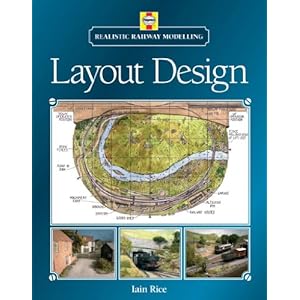
Book Review: Layout Design by Iain Rice


The first book in a new series by J H Haynes & Co, Ltd, Realistic Railway Modeling, is Layout Design (2010) which is as much a slice of philosophy as it is a hobby guide book. Written by prolific British author Iain Rice, the tone and flow of this book is informal and smart, and promotes a particular approach to modeling that is informed by the author's artistic schooling.

This 176 page hardback retails for $34.95/£25.00 and is presented in a clean, color-coded scheme with sans serif typeface that moves from overall philosophy and approach to the hobby through "Boring Bits" and the "Things You Can't Ignore" chapters to the heart of Rice's argument in the "Visual Design and Presentation" chapter. Only after all these have been rightfully considered along with prototype research, logistics and operational considerations does he address the actual plan for your layout. He notes in his "Preliminaries" chapter that the track plan has traditionally been held as "the only blueprint needed to build a model railway." 

Not so, as Rice argues for a more complete and holistic method of design that resolves all issues of the layout from the perspective of finished product. He puts forth that design considerations must involve viewing perspectives, operational desires, visual harmony and proportion as well as the nuts and bolts of the construction. The artistic elements are where he places emphasis, and the rest of the pieces are supporting cast to achieve his goal of a realistic model railway - including the track plan. The effect of the layout as a whole is the prime motivator.

I could not agree more with Mr Rice about designing holistically. Too many times I have consulted with clients and friends over track plans. Too many times I have tried to get them to think in these holistic terms, only to be humored for a few minutes before turning back to the track plan as the central organizing principle of a layout. It could be that people are thinking of the track plan as the plan view for the layout. I believe it was Mies van der Rohe who promoted the primacy of the plan as a generator for good architecture, but he was after different overall effect than a model railroader. 

Mies was organizing space to be experienced from within. Adjacencies, relationships, proportionality and materiality were key ingredients for the experience of an inhabitant. While all of these ingredients are also key in the development of a model railroad, the viewpoint of the experience is almost completely exterior to the space itself. It is much more akin to a painting or sculpture than a work of architecture. The arrangement of ingredients must be thought of in terms of the gaze and not the experience of being in a three dimensional space. So in model railroading, the track plan must be considered an ingredient, too, and not the primary organizing element. The better method of organizing space in a model railroad must be in something more like the perspectival vignette sketch that allows for the understanding of the visual relationships of the different elements in the layout. 

It is not surprising, then, that Rice's main graphic tool for developing and communicating his layout designs is the perspective sketch. His signature sketches - usually rendered in color -  allow him to consider the placement of buildings, roads, landscape, backscene, and tracks as an entire composition for a holistic design approach. 

In the "Visual Design and Presentation" chapter, he shows that this sketching method for designing affords consideration of proportion, composition, viewing angles, scene division and visual balance. It is also a way to test out "sizes, mass and scale of objects and their placement in the scene." He suggests some basic techniques for this such as using the Golden Mean (or Golden Section) to find the appropriate boundary areas for locating things. All of this is to support his main goal, which he sets out in the introduction: to create a believable and realistic ambience of a prototype railway. 

Throughout the book, Rice includes many great devices for framing how one should think about layout creation by setting of parameters. His first parameter is to set a general approach of "compromise and deception" to achieve the desired ambience. Then, in order to create this ambience, one must nail down underlying motivations to arrive at a guiding mission statement with which to evaluate all decisions. Using this approach, a layout practically designs itself - all you have to do is figure out the constraints and goals you have, then stick to them throughout all the rest of the decisions!

He explicitly addresses this in the chapter "Rationales, Lists and Logistics". He suggests using lists to help organize your thoughts and prioritize desires. Ironically, one of the few things I find missing from the book is a list of things to do while designing a layout as a way of condensing the whole book into an actionable guide for the reader. I would suggest making this list for oneself, starting with why you are even building a layout to begin with. 

I very much enjoyed reading Mr Rice's overall look at designing a layout. It is an easy read and well illustrated, presented and produced, and I'm looking forward to seeing more of this series. This is a great book, especially for the beginner who is wondering what model railway building is all about. As an intermediate or advanced layout designer, this can help clarify what you may already do, but give you more control over the process.

What I am left with is the interesting contrast in approach to modeling between Rice and many of the mainstream American model railroading authors. This is something that may be worth thinking about in the near future.


Friday, August 6, 2010

September MR Editorial


Editorial or advertisement?


I am a casual reader of Model Railroader magazine every month (or two or three as I often let them pile up before consuming). I say casual because I don't read every word, but rather I skip and jump through the articles, mainly enjoying the pretty photographs as I would gazing out a car window at the scenery: I make note of interesting things, but for the most part I just enjoy the activity, and MR is a great publication for that. The only things I read closely are the editorial and Tony Koester's "Trains of Thought" column, which is the best thing in the magazine. The Sept 2010 issue was no exception, and I am motivated to comment because of the editorial.

Editorial


I find a less-than-minor annoyance in the editorial by Neal Besougloff that read as an advertisement for all things MR. The point of the editorial was that MR publishes a lot of special issues under separate titles every year, and that MR magazine alone can't publish all of this information desired by readers by itself. After running down a laundry list of these special publications, the editorial concludes with instructions on how to order them. To me, the editorial is a space for the editor to voice his opinion about the subject of his publication and/or frame the topics that follow in order to add value to the reader's experience of the material the editor has compiled. This month's editorial was simply an advertisement.

This seems indicative of the editorial direction of the publication. Understanding that the publishing industry is on the ropes at the moment and that MR is a for-profit venture, MR has consistently displayed a commercial face with regards to how it treats its advertisers and the lack of citations within its pages of other publications in the hobby. It heavily moderates its online forum to delete references or links to other publications and is generally defensive about its market share. I will reiterate that MR is a for-profit venture, and further say that it all of these actions are perfectly normal and can be seen as good business practice (albeit not good if you take the long view of the situation where dedication to the content makes for a more valuable product) . What bothers me is that it is so obvious and actually gets in the way of  the delivery of content in the magazine, like taking up editorial space to advertise its own products. It is inconceivable that they or any other publication would take advertising space to editorialize, so why is it OK to do the inverse?

Thinking man


A second notable aspect of the editorial is found in the body of the editorial is a mention of Tony's Model Railroad Planning described as a "thinking man's guide to model railroading". I found this very humorous and telling at the same time. It does two things - it says that Tony's column is an intellectual cut above the rest of the publication, and it says that the rest of the publication is not about 'thinking.' What this indicates to me is an implicit acknowledgment there are two different approaches to model railroading (and, by extension, everything in life).

The two different approaches can be expressed in many different dichotomies that relate to a division of  Thinking and Technology. From a discussion about the term 'design'.:

Modern bourgeois culture made a sharp division between the world of the arts and that of technology and machines; hence culture was split into two mutually exclusive branches: one scientific, quantifiable and “hard,” the other aesthetic, evaluative and “soft.”


What we see in Neil's description is this same rift in model railroading between the hobby practiced as an intellectual approach to creation, and one that is a craft approach to artifact building. Not saying either is better or worse - I am merely pointing out that this difference does exist, and we should embrace both and not be threatened by either - but I would like to see more of a balance between the amounts of the two approaches seen in publications for the hobby. It is then the place of design as a distinct activity to unite these two to produce a superior product that neither could do on its own. A  for-profit magazine such as MR should strive to achieve a similar balance between focusing on creating valuable content and the extraction of monetary value from presentation of content.

Friday, June 27, 2008

The Marshall Amp of Track Plan Books?

book ad

Model Railroader has gone where no track plan book has ever gone.

It has surpassed 100; it has reached a new "volume" level for the occasion when you have gone through 101 track plans and need just a little more track planning "to make that extra push over the cliff"; it has simply become the "11" of the model railroading track plan book world. It goes to 102!

But seriously, it probably is worth checking out. I haven't seen it, nor held it in my hands, but it looks to follow the standard format for all of Model Railroader books: aggressive typography, scenery-rich track plans, composed color photos, and some supporting text. Usually good "glossy" fare from the first name in model railroad publishing.

The cover has an interesting topic: "Design your own detailed drawings". If you parse that, it means that you are designing the format of the drawing, not using a drawing to design a layout, which is probably what they mean.

Track planning books are good for a couple of things:

If you have never built a model railroad, finding a "neat" track plan and building a layout to learn what the hobby is all about. Then, when you have learned what you like and don't like about the plan (and/or hobby) go design your own layout according to your own particular set of needs and desires.

When you are designing your own layout, you can appropriate ideas and situations from many different layout plans to incorporate into your own. Sometimes you can start with a track plan that generally fits your conditions, and then modify it accordingly. (I don't recommend this - it is like starting with a house plan from a House Beautiful plan book and making the garage a little bigger, shifting the entry orientation to the side, turning a Georgian house into a French country house...)

Simply fun to look at and ponder what you would do differently and why. What could be better on a lazy Sunday afternoon, or while you are waiting for the bus? The eye candy is usually pretty good in these books, so I would suggest having it after your meat.

If you get this book, let me know what you think of it.