Friday, April 12, 2013

Voice modeling

"Morning, Bud. This is Hank down at the Maxwell plant..."
Trevor Marshall just posted a nice entry on his blog about operations. In particular he discusses the possibilities of modeling the time it takes to do brake tests per car and how that helps to slow down operations. The key, in my opinion, is to provide interactions to simulate activities. 

These provide the operator continuous 'doing' activities and should entail some sort of feedback component to 'reward' the behavior. I would love to see a throttle that had a button labeled 'brake test' that could account for number of cars, etc., and provide feedback sounds of compressor, and an "air test OK" voice reply when done. The possibilities are numerous. This could be easily modeled if one used a mobile computing device as a throttle through JMRI interface, but I would prefer a physical throttle that had such things programmed into it. 

Along the same lines, Tom and I have started brainstorming something like this for customer interactions with the railway agent/dispatcher on my layout. In particular, the idea that a customer calls the agent when a car is loaded or unloaded and ready to be moved.This would be triggered by a timer started when the car gets spotted, or via a random call generator during a session.

A pre-recorded voice of an 'actor' (probably not officially affiliated with Screen Actors Guild or any other professional organization - in other words, me) would say something like, "Morning, Bud. This is Hank down at the Maxwell plant, and we need an extra box car today for a special order." The agent then writes up a waybill and/switch list for the locomotive crew combined with previous calls before the call time and off they go. At the plant, a crew might also get an earful from Hank telling the story of the fish that got away while they are trying to secure the brake lines for that special delivery box car, and they can't leave until he is finished.  

On a very short line (1.9 miles) like my Hoboken Shore RR, customer interaction was an arguably more direct personal component of everyday operations. Having the voice of a particular customer letting you know what needs to done provides prototypical modeling and operational interest. What you model all depends on what you think is interesting about railroading.

Saturday, February 16, 2013

Lone Star Region's Marker Lamp

Cover of the latest Marker Lamp

If you are interested in what is going on in the Lone Star Region (LSR) of the NMRA, the latest issue of the Marker Lamp is available online. This is my first issue as editor, and I am currently taking suggestions for how this publication can move from print to digital with all that the virtual publishing realm has to offer. These new features will be discussed and developed over the course of the next several issues and then thoughtfully incorporated into this new form.

If you live in the area of the LSR, you should consider becoming a member of the LSR and the NMRA to help support the efforts to improve the hobby, to meet, enjoy and learn from the other members, and to participate in the many events the local, regional and national organizations produce. Of course you should also consider joining if you live elsewhere (regional memberships are processed through the NMRA according to where you live), and you are always welcomed to get a digital copy of the quarterly Marker Lamp. Next publishing date is May 15.

Saturday, January 12, 2013

Railroad Conspiracy Theories

There are many stories of how passenger rail operations in this country were killed by American automobile interests. One of my favorites is the biggest one about General Motors and the Los Angeles streetcar system that has its own Wikipedia entry, and has been retold in various formats, including at the Huffington Post. The original story comes from Bradley Snell, who has devoted many years to researching GM and its history. this week, a noted design blog, 99% Invisible suggests that this story is not true, but rather that it was the Southern Pacific railway that was responsible.

A two and a half minute snippet that sets out the conspiracy theory for those in a hurry, with a full-length feature below for those that are really interested.

"Taken for a Ride" is a full-length feature that was produced by PBS several years ago where a case is made for the theory that the dismantling of mass transit was spearheaded by General Motors:


Whether or not either theory is true, it sure seems plausible, and the extension and ramifications of just the possibility that it is true makes for interesting conjecturing on how things happen in this country.


Further reading
  • Bradford C. Snell, American Ground Transport: A Proposal for Restructuring the Automobile, Truck, Bus and Rail Industries. Report presented to the Committee of the Judiciary, Subcommittee on Antitrust and Monopoly, United States Senate, February 26, 1974, United States Government Printing Office, Washington, 1974, pp. 16-24. 
  • Cliff Slater, 'General Motors and the Demise of Streetcars' published in Transportation Quarterly vol 51, 1997 (Eno Transportation Foundation) puts forth the argument that the streetcar was eliminated by the market.

Saturday, December 8, 2012

The speed of train travel in the USA

 
There is an interesting article over at Fast Company about the lack of progress on the speed of train travel in the USA. While there was quite an improvement early on, things haven't changed much in the last 80 years or so while other countries are enjoying the modern speed and connection to the landscape that high speed rail systems offer today's traveler. 
The grip of the airline industry over politicians has kept railroads in the USA from upgrading and improving service. In Texas, which Bill Clinton said "God made for high-speed rail," it was the regional airlines that kept the Golden Triangle project from happening almost twenty years ago. 

There are also a lot of links in the article to alternative ways of thinking about trains and mass transit including an article on Amtrak's vision for high speed service.

Elon Musk’s Jetsons Tunnel, And Other Out There High-Speed Transit Ideas

Tuesday, November 6, 2012

Inside railroading


Found a great shot a few weeks ago of the inside of one of the large warehouses in the New York area. I found it on the French forum that has a thread that focusses on New York Harbor railroading. In another post, there is a picture of this terminal in a Life story on a soldier's body being returned home after being killed that says this is in Brooklyn.

At the point I saw it I thought it might be the Lehigh Terminal at 26th-27th streets, but I can't remember why I thought that. It is hard to be careful with documentation of research - it is hard to do at work, and it is hard to do at play. I'm considering using an academic software such as Evernote or similar in order to keep my findings straight. Anyone have a system for organizing their railroad research? I need to do something soon at both work and play...

Thursday, October 11, 2012

Drop-in modules


Check out the post on the R Street Layout blog about a drop-in module system the Sacramento Modular Railroaders are developing. Similar in idea to the Operational Design Element (ODE) proposed as part of the Dynamo system. I love the fact that there is a second level of modularity being created. A module within a module. Reminds me of the Jerry Seinfeld joke about their being so many Starbuck's in the world that one day he saw a Starbuck's inside of another Starbuck's.

I can easily imagine this working in the Dynamo system. Simply have these inserts for industries, stations, railroad infrastructure, whatever. Miniature wargaming meets model railroading. And here's someone actually doing it!

Saturday, September 29, 2012

Operating experiences

At a recent ops evening, I realized that there is a big difference in the experience of a session that is dependent on how familiar one is with a railroad, layout or group of people. What made me consider this is that we had a guest operator that evening who is an experienced and well-known modeler and operator familiar with the prototype of the layout we were operating on, and I bet his experience was completely different than mine.


I've been operating on this particular layout for a few years, and I have worked a yard job several times now. This week was the first time I was able to operate this job 'in the zone' and not really have to put effort into what I was doing, but rather I found myself concentrating on how I was doing it.

I'm familiar enough to now know which trains do what, how they effect (or don't effect) my job, where the yard limits are, where industries are located, what to watch out for and when it is good to interface with other jobs, etc. Because of this, I was able to plan my work. Not only think about things in terms of what order should I do them, but also how should I get this from here to there, what makes sense to do at the same time I do that, how can I use that run around section most effectively, how can I keep working when I know there will be other people in the yard, etc. It made for a smooth evening and the satisfaction level was high.

Now I imagine our friendly visitor was having just as much fun as I was, but I'm betting for different reasons. He was not familiar with the schedule nor methods of doing things, and had a crew member working with him to help smooth over these things. It may have been a bit of a disjointed experience, since he had to break from operating the model several times during the night to get instruction and feedback on what was going on. He probably wasn't in the zone.

But, he was probably experiencing a different sort of enjoyment that stemmed from his greater knowledge of the prototype (he knew what the characteristics of the trains were better than I do), the prototype's procedures and translation into our operating rules, how this section of the prototype fits in relation to his layout (he models the same prototype), etc. On top of this he was in the throws of the interesting and challenging situation of learning new things, being around new people, and seeing everything on the layout for the first time. This all combined for an equally enjoyable evening to mine (unless he was lying), but his was a completely different experience. I'm guessing his evening was more exciting than mine, but that mine was probably a deeper overall experience.

So what might be learned from this bit of thinking? Several things leap to mind in terms of how a session and a layout are created and even how a layout may evolve its methods and operations over time. The obvious thing is about creating job situations that can fit different levels of experience and how one translates that to regular operators as well as for visitors. Explaining a few key things to a newbie can enhance the deeper satisfaction of a first session, and new items for old hands can bring new challenges and learning back into the picture to keep sessions interesting. The dissemination of knowledge about how to operate a given job on the layout could be gathered into a document (such as tips and tricks on how to operate the yard), that could be useful and added to by guests and regulars alike.

There are many more things I could think of around this idea of crafting an experience, but the point here is that we can approach model railroading as 'experience design.' This is a field of design that concerns itself with how users/ occupants/ customers experience a place, product, web site, etc. It is concentrated in the effort to invoke a certain type of feeling in the user to make bring them satisfaction or pleasure with the interaction in a certain way.

I think many modelers already subconsciously think this way without calling it experience design, especially when thinking about designing panels, waybill systems, etc. and probably more in terms of usability (interface or interaction design) versus emotional reactions. The design of the layout room can probably be thought of in these terms as well, with many modelers trying to get a feeling of the back woods by using paneled fascias or by using old time graphics and typography on their printed materials and signage. But I'm willing to bet that not many are consciously looking to create a certain emotional reaction or experience in a concerted manner with operating jobs. It would be interesting to approach things through this lens, and it is something that I will try to keep in mind as I am creating my own operating sessions.


Thursday, August 23, 2012

Battery powered locomotives

http://www.tamvalleydepot.com/


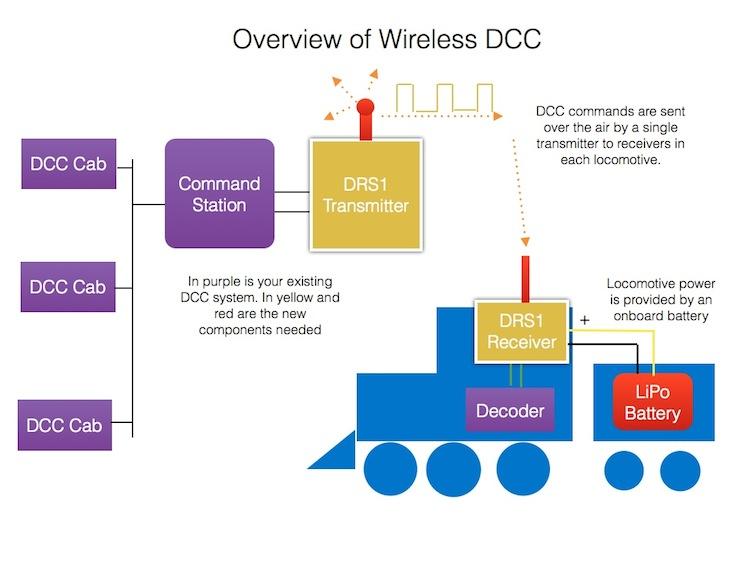
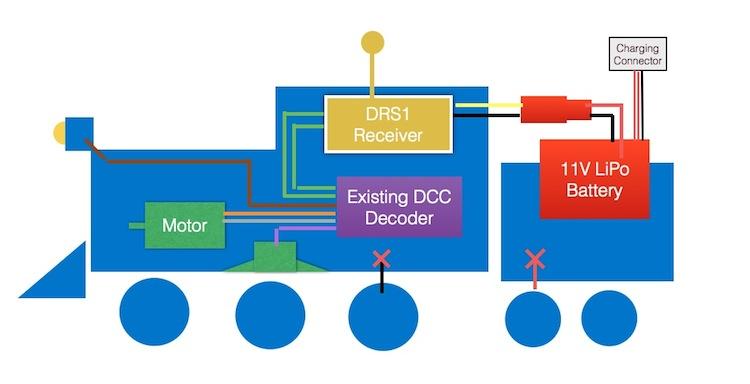
I've been waiting for this development ever since editing Rick Mugele's BR Locomotives article in LDJ 37. He was using a radio control unit built for R/C cars and large cell batteries in an ingenious set up for larger locomotives in HO scale. But now there is a product from Tam Valley Depot that marries battery power and DCC control In a wireless system that does not require clean track or wiring. 

http://www.tamvalleydepot.com/

I am completely ready for an alternative to track power for model railroads, and I see this as the last barrier to mainstreaming the hobby. The complications of completing a large amount infrastructure before using a toy have kept model railroading in the province of retired or people with large chunks of time available to devote to construction before recreation. This barrier was removed by the R/C industry years ago with cars and ARF (Almost Ready to Fly) airplanes and then helicopters. Foam construction made planes light and complete enough for quick wing attachment and charging of the batteries. Something similar needs to happen in model railroading, and battery powered locomotives are a key component. 

Imagine Christmas morning (or Haunikha or a birthday or other occasion) and a ten year old rips open a toy that requires about a year of nights and weekends of carpentry, artistry, electrical wiring, and fiddling to get a modest size layout to the point when they can play with it. That toy is a train set. Now imagine the second present is an ARF airplane or a completely ready to fly helicopter or car ready to drive. Which one is going to be more desirable?  

I'm interested in Tam Valley's offering, although it won't do me a lot of good for my switcher-heavy roster of 44 tonnes and box cabs in HO scale. I would need to use a boxcar or transfer caboose to store the extra equipment, but that is not possible with my pocket terminals. I'll get one to try out, but is impractical for usage for my pocket terminals at the moment. Miniaturization will need to be applied to this before it becomes a must have, but it is pretty darn close to that already. Let me know if anyone is trying this already. The tyranny of dirty track is about to come to an end!

UPDATE: http://ponyrr.blogspot.com/2014/07/cvp-rc-is-aok.html

Sunday, August 5, 2012

The importance of hand drawing

I think today people still have a romantic notion of futurist technology. There is still something about our never-ending desire for new stuff and new technology that always leaves behind sound, quality methods of practice. I think hand drawing is one of those methods that often gets overlooked in favor of the zippy-zoominess of computer drafting and modeling. This is as true in model railroading as it is in professional life.

With so many good track planning applications out there now, it is hard to resist the lure of technology in the layout designing process, but I believe that it should only be used where appropriate. And the appropriate time to use a rigid, neat and clean method is not at the beginning of design work, but rather after the idea has had a chance to be messy.


My own process includes many iterations on butter paper (also known as trash paper, trace paper, etc.)to get basic ideas and possible development paths out of my head and into a space where I can start to critically assess and work with multiple ideas. Having a semi-transparent paper helps tremendously as you can overlay a clean sheet over a previous idea and make minor changes or riffs off of that idea quickly. This very loose, preliminary programming (what are the different elements I will want to incorporate in the plan) is a time to get everything you can on paper to actually see what the possibilities are. I can't emphasize enough the importance of making your ideas visible in order to make significant and smart progress on any design.

After an initial brain dump onto paper, I will go back and cull good ideas and begin to work with them by adding, subtracting or combining ideas until I have one or two satisfying designs, then I move to a design development plan of sorts where I am trying to capture what a design would do with measured, real constraints and dimensions. This is still on paper, but it becomes a more careful rendering of ideas. In order to do this, I create a little template to use while drawing.

I make the template specifically for each layout. The one shown above is for my Hoboken Shore layout and is made from a scrap of chipboard (thin cardboard). I got this idea from Andy Sperandeo (I think it was a track planning supplement to Model Railroad Planning one year?). *Addendum: I found where I saw Andy's presentation of the template idea: Workshop Tips, Introduction to Track Planning, pg 11. This was one of their short supplement publications to MR at some point (no date, but there is a number on the cover, which is probably their identification number: 618147).* It includes a minimum radius, 50' box car scale, a turnout and track center scale. These are all dependent on what your layout established layout standards are going to be.

On the HBS, I am going to only use no.4 turnouts (on the HBS portion, but I'll have no. 6s in the Erie section) and I wanted to have an 18" maximum radius (if 18" works, I know 15" minimum will work in select areas if desired). The 50' box car will be my standard maximum length car (most will probably be 40'), and with the scale I will be able to ensure proper length of spurs for how many spots I want to have. Track centers become important in yards, and I figure a 2-1/2" spacing is workable with the amount of traffic and space I have.

This template is what I used on the current hand drawn plan so that I have a reasonable level of comfort that it will work. At this stage, everything is pretty well worked out in terms of desires, constraints and fit. Now it is time to appropriately move to the computer where precision comes into play as a means to make certain it works, and to make finer detail adjustments. If I went to the computer any sooner, it would become more difficult to try variations of any sort of magnitude because of the time devoted to precision with the computer as a tool.

Once I get the layout "into the computer", I will be able to not only get a precise plan, but I'll also be able to generate a list of track needed to accomplish it, the ability to print out full size templates if desired, and a nicely finished representation of what I am going to build. The operative word is finished, which is not the type of thing you need at the beginning of a design process. (Actually I believe any plan, including a finished one, is merely a starting point for change, and changing something in the field once you are working at full scale is perfectly acceptable and encouraged by me.)

So put down the mouse and pick up a no.2 thinking stick the next time you are going to start a track design. Your plan will be better for directness and immediacy of graphite smeared around some tracing paper.

This post was inspired by Tony Thompson's recent post on keeping a modeling journal, which is an excellent idea, and should come before you even get out the tracing paper!